
What should a smart water pilot tag list include?
A smart water pilot tag list should connect a small set of operating decisions to named process signals, documented meanings and an agreed test. For every signal, record its asset, measurement location, unit, source, range, update behavior and quality status. Then define how the operator will use it. A pilot is ready to evaluate when the owner can trace a displayed value to its source and explain what a missing, stale or implausible value means. This approach gives a buyer a reviewable scope before committing to additional sites or software functions.
For a distributed water project, begin with one practical question. Can the duty team identify a stopped treatment train, distinguish a planned shutdown from a fault, or check whether a storage tank is recovering? These questions require different combinations of measurements and equipment states. Select the first question with the local operator and the person who will receive remote notifications. HOSON’s public smart water overview describes monitoring and remote operation concepts. A project enquiry should turn the chosen concepts into specific signal and acceptance requirements for the proposed installation.
Set the boundary around one operating decision
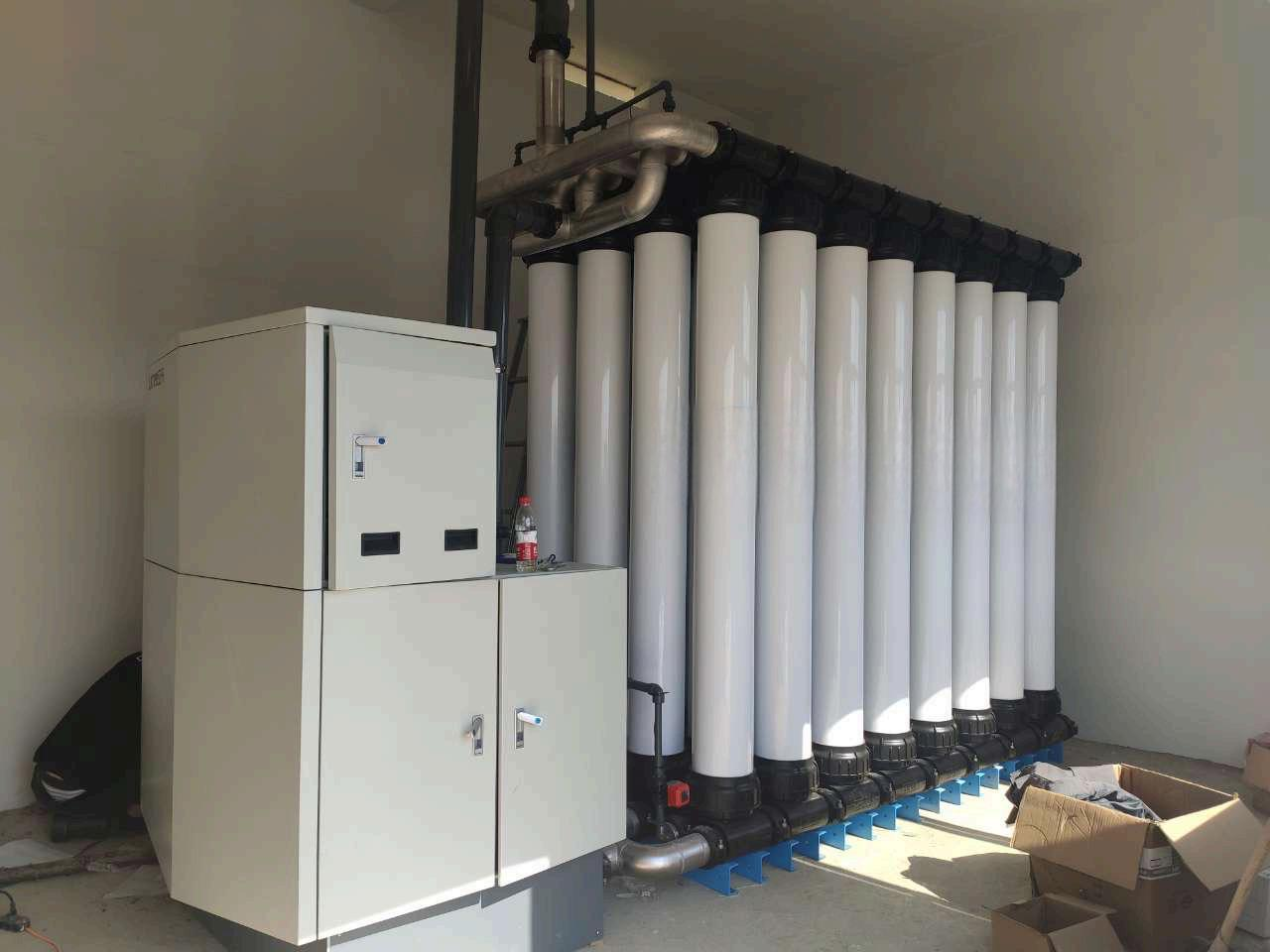
Write the pilot boundary in a short paragraph that names the site, equipment, operating modes, users and decision. For example, an illustrative pilot might ask a central team to identify unexpected loss of output from one ultrafiltration train while the local controls continue to operate the plant. The team could need production flow, run feedback, operating mode, a relevant fault state and confirmation that data is current. A broader question about membrane condition would need additional process context. The example is a scoping exercise, not a description of an existing HOSON deployment.
List what must happen after the team identifies the condition. An operator might call the site, compare a local instrument, review a work order or follow an approved plant procedure. Record which person can make that decision and which evidence they require. This avoids buying a large collection of signals that nobody has time to review. Keep promising but untested ideas in a later phase, with the instrumentation or operating records needed to evaluate them. A tightly described first decision is easier to commission and easier to repeat.
Give each signal a stable identity and physical meaning
Use a naming convention that remains clear when a second site is added. A name can combine site, treatment train, equipment or measurement point, and parameter. Keep the human description alongside the machine identifier. The description should state where a pressure is measured and whether flow is instantaneous or accumulated. Record the source drawing and instrument identifier so that a technician can find the device without interpreting the dashboard layout. When an existing controller already uses reliable identifiers, preserve a mapping to them rather than creating a second undocumented vocabulary.
A process tag register and an equipment inventory serve related purposes. The register explains the signals used for an operating decision. An inventory identifies the devices and software supporting that decision. CISA’s OT asset inventory guidance treats maintained asset records and classification as foundations for managing operational technology. For this pilot, connect each selected tag to a known instrument, controller or calculation owner. A calculated value needs its formula, inputs and validity rules. An operator entry needs a timestamp and an author. These details make later changes traceable.
Use a register that reviewers can actually complete
Create the register in a format the operator, integrator and equipment supplier can review together. Keep mandatory fields separate from optional enhancements. The following worksheet gives suggested groups of information, rather than a fixed protocol specification. Populate it from the current drawings and confirmed device configuration. If an address, interface or source cannot yet be verified, mark it as an open item with an owner. A blank field is harder to manage than a stated question with a due date.
| Register group | Information to record | Review evidence |
|---|---|---|
| Identity | Site, train, tag ID, description and drawing reference | Walkdown or drawing comparison |
| Meaning | Unit, measurement point, direction and expected range | Instrument and process review |
| Source | Device, controller or calculation, interface owner | Approved configuration record |
| Timing | Sampling, transfer, storage and stale-data behavior | Time-stamped test record |
| Quality | Bad signal, maintenance, out-of-range and manual-entry states | Simulated or controlled acceptance test |
| Use | Operating question, display, recipient and action | Operator scenario review |
Agree on units, scaling and derived quantities
Check the complete path from sensor to displayed engineering unit. A correctly wired signal can still become misleading when a controller range differs from the instrument range or when the display uses a different unit. Review decimal precision, sign convention and any temperature compensation that matters to the selected parameter. For a totalizer, document its accumulation interval, reset behavior and treatment of a replacement meter. Keep cumulative volume distinct from instantaneous flow in both names and screen labels. A purchaser should ask to see these details during the demonstration.
Derived indicators require an additional review. A daily production total needs an agreed day boundary and a rule for gaps. A specific energy calculation needs a consistent volume boundary and electrical measurement period. A membrane comparison may need operating conditions that the initial tag set does not contain. In those cases, label the indicator as unavailable or provisional until its inputs are suitable. The pilot should reveal what can be calculated reliably with the available evidence. It should also expose where another instrument or a revised collection method would be necessary.
Define timing and data quality before drawing trends
Distinguish the time a value was measured from the time it reached the remote system. A trend that uses receipt time can rearrange an event when a connection is delayed. Ask how time is maintained at the instrument, controller, gateway and remote platform, and record the chosen time reference. Different signals may have different useful update intervals. A tank level used for a shift review and a fast equipment transition need different treatment. The required interval should follow the operating question and the limitations of the approved collection path.
Specify visible states for fresh, stale, bad, maintenance and unavailable data. Agree how long a value can remain unchanged before it requires attention, considering whether the actual process could legitimately be steady. Do not infer failure simply from a flat line. During a communications interruption, a previously valid measurement should retain its original timestamp and an understandable quality indication. Confirm whether historical records can be buffered and transferred after reconnection. If that function is proposed, test its capacity, event ordering and handling of duplicate records rather than relying on a general promise.
Include equipment state and operator context
A measurement is easier to interpret when the viewer knows the operating mode. Agree on the states needed for the pilot, such as service, standby, cleaning, maintenance or local operation. Confirm whether those states come from the controller or require an operator entry. A pump start request, run feedback and available-to-run status can have different meanings. Select the states relevant to the operating decision and show how conflicts will be explained. A remote viewer should be able to identify uncertainty without assuming that every command was successfully carried out.
Record contextual information that changes the meaning of a trend. A meter under calibration, a train taken out of service or a revised production schedule may explain an apparent anomaly. Decide who records such changes and where that note is retained. Avoid making free-text notes the only record of a major configuration change. A revised scaling range, for instance, belongs in the register and configuration history. EPA’s OT assessment includes monitoring and alarm reporting within the types of connected activity that warrant an OT review, making this context relevant to both operations and access planning.
Test the tag list through a controlled event
Prepare a test sheet for each selected operating scenario before the supplier demonstration. Record the expected local state, expected remote display, acceptable timing and evidence to capture. Start with safe simulations or approved test inputs. Site personnel should decide whether a live equipment transition is appropriate and how normal operation will be protected. Compare the local reading, controller value and remote value at an agreed point in time. Record discrepancies as findings, including the device, configuration or communications layer where further investigation is needed.
Include a planned stop, a transition back to service, an unavailable instrument and loss of the communications path. After restoration, check whether the display identifies a gap, whether retained history is ordered correctly and whether any notification is repeated. Ask an operator who did not configure the system to explain what happened using the records. If they cannot distinguish a process problem from a data problem, revise the labels or context and repeat the relevant test. This is an acceptance method proposed for the buyer’s project, with pass criteria agreed by its responsible engineering team.
Close the pilot with an owned register and a rollout decision
At handover, retain the reviewed tag register, source mapping, tested configuration version, unresolved items and evidence from the scenarios. Name the person who can approve additions or changes. A future sensor replacement should trigger a review of its unit, range, identifier and quality behavior. If several sites share a template, document local exceptions rather than forcing different processes into identical labels. Give operators a short guide to the states they will see and the contact for correcting a misleading value.
Use a small review record to keep the decision visible after commissioning. For each finding, note the observed behavior, the intended behavior, the owner and the evidence needed to close it. A mismatched unit and an unresolved sensor fault need different corrective work even when both appear as an odd number on a screen. Review the completed record with operations before expanding the template. This preserves the reasoning behind the pilot instead of leaving the next site team to rediscover it from screenshots.
Evaluate the pilot against the original decision. Can the team locate the correct asset, understand the current state and choose its next action with the available records? Review how often missing context required a phone call or site visit during the evaluation period. Use those findings to select the next site or operating question. For a HOSON monitoring enquiry, share the first operating question, a preliminary tag register, the site communications conditions and the acceptance scenarios. That material supports a focused proposal for remote monitoring and distributed site operations.